



Page 19

Jajube Mandiela

Hey, my name is Jajube Mandiela, I am an actor, director and artistic director of bcurrrent performing arts. This is my thought, number 1. So… I have recurring dreams and recurring nightmares, one of the ones that’s awkwardly more pleasant, in a certain sense, is one where I am performing in a dance or a play and I have forgotten the script, I’ve forgotten all the lines, directly correlates to my actual fear of never being able to learn all the lines when I start a new play.

Hey I’m Jajube: thought number 2. So I’m a person who has you know like some liberal views and some conservative views and I’ve never liked nudity onstage but recently I was talking to someone who… she’s a big advocate for it and was like we need to get used to people’s bodies just being nude and what I realized in that conversation was what I don’t like is when it’s used as a gimmick, for shock value especially or when it’s just used too extensively, so I can dig it, I can dig nudity when it makes sense with the story and it’s nonchalant

Hey, I’m Jajube: actor and artistic director of bcurrent. To festival or not to festival? So…I was going to talk about like, why, why they exist, but I realize that is really obvious they exist to experiment, take risks, to get picked up for future mountings and then I was thinking what do I love about music festivals? They’re. for me, rare, huge, great vibes and I’ve never been but I think Edinburgh must be like the musical festival of all theatre festivals.

Hey, I’m Jajube this is thought 4. So, on Sunday night I went to RiseUp! It was an event featuring Indigenous and Black artists, sharing theirs joys and their rage and their solidarity between the two communities and all the proceeds from that event went to Black Lives Matter Toronto. And it made me think: Hey! Solidarity between those two communities is also solidarity between different artistic disciplines. It featured poetry, it featured theatre, it featured singing and it was so beautiful for it to just be a night of everything, and I, I was just really inspired and want to see more of that.

Hey, I’m Jajube Mandiela thought 5. Instagram. So I’ve been on social media – all kinds – for about two to three years and my favourite is Instagram. I like to be a bit of a voyeur then post every once in a while then post every once on awhile and comment every once in a while with people I know and people who are out there in the world that I don’t know at all…and organizations. But when it comes to theatre companies on Instagram, it’s bugged me, I find so many posts, photos of the rehearsal process but not the production stills and there is something that…that live element that just doesn’t work for me as a medium, there’s something, I want more, like I want, I want, I don’t know what I want

Hey, this is Jajube Mandiela thought 6. Hip Hop Theatre. So back in 2104 at bcurrent we co-produced a show called Brotherhood the hip-hopera by Sebastien Heins, and uh, recently at that event that I went to on Sunday… I was speaking about in thought… 4 Donna Michelle St Bernard did some hip hop and it just got me thinking about Hamilton about In the Heights obviously about Brotherhood the hip-hopera the musical we did, and how much this genre is growing and budding and changing becoming a staple of theatre and I am really excited about it.

I’m Jajube. Thought 7. Woke. On Saturday I had a very brief conversation about the term “woke”. I came across it about a few years ago and I really love it because it makes me think of Plato’s philosopher’s cave…where there are people who think that the shadows on the wall is reality…but actually there are other people creating those shadows…and only a philosopher king can wake these people up to the reality outside, to the light outside the cave. And that same night I was going to go somewhere on my phone and I noticed an old one from a year ago called “think plus stay woke”

Hey my name is Jajube Mandiela. Thought 8. Pool hopping. I live in Toronto and pool hopping is a thing. Public, public pools late night after dance, after bar, whatever…especially on heat wave nights. And I am thinking… ”What if there was like late night theatre hopping, what if there was late night street performance or public intervention, like just something really underground and cool and wonderful and successful?”

Hey I’m Jajube. Thought 9. Public intervention. So this fall we are bringing our first show ever that launched the entire company 25 years ago… “dark diaspora… in dub”. But…it’s going to be a public intervention show called “diaspora Dub” with parading imagery and, uhhh, we have toyed with what if we don’t use the word public intervention? What if we use street theatre? But people associate sometimes with amateur and what if we use immersive? but it’s not quite immersive. Yet, when I think of public intervention I think of the [tv] show “Intervention” and alcoholism.

Jajube Mandiela. Thought 10. On Bios. So, I really enjoy writing bios for myself to include in programs as an actor and as a director, but it’s something that I have started to enjoy over time as my resume builds. And then I will come across people who either sometimes have good resumes or are really, really budding in their careers, and they hate writing bios. And then I came across a note that I wrote recently that says: “Bios, know thyself, praise thyself or be repulsed”.

Hey I’m Jajube Mandiela. Thought 11. Genres. So, in theatre, I find, there’s mostly just the big, big genres like musical theatre and like drama and like indie theatre but like those don’t always help. I often want more nuance, at least at the indie level I find we don’t tend to codify or use the genre system and in comparison with like film at both the mainstream and the indie level they do and me, even being in the industry, sometime I just want to know what I am in for.

Hey I’m Jajube Mandiela. Thought 12. Dub Theatre. This past summer I realized that Dub Theatre is a home grown Canadian theatrical form. Dub poetry originated in the Caribbean, and then in the 90’s is when the first dub poetry script was ever staged by our founding artistic director, ahdri zhina mandiela, and yes, it’s also been done in England after that, I don’t know much of it…if it’s been done in America but Dub Theatre continues to this day, done by several people and it’s a thriving, growing, Canadian genre.

Hey, I’m Jajube Mandiela. Thought 13. It’s a secret. So. Two years ago I joined snapchat, and I was doing a show on the farm, and I had a lot of free time, I loved to send snaps and watch snaps, and there was something about it, it made me, and it reminded me of theatre that’s so live, it would disappear, it’s not meant to be kept, other than screen grabs, but I won’t get into that, but, but it – it was that element of it’s only there when you watch it, then it’s gone. And it’s got me thinking of – that since then, ever what if there is a new genre of theatre and was snap chat theatre? They merge together. Don’t steal my idea.

Hey, I’m Jajube Mandiela. Thought 14. VR (virtual reality). So I don’t know much about VR. I have, one time, put on those goggles and experienced something that was like a video game, 360-degree camera style, and been like “what’s happening?!” and then I have also seen a VR music video I thought that was really cool. But this whole virtual reality, I’m thinking, is TV, though, really going in the direction of being so real that it’s just reality? We already have theatre, isn’t that as real as it gets?

The Birth of a Digital Rehearsal Process for Live Performance: A Slack Convo

DSC_0291
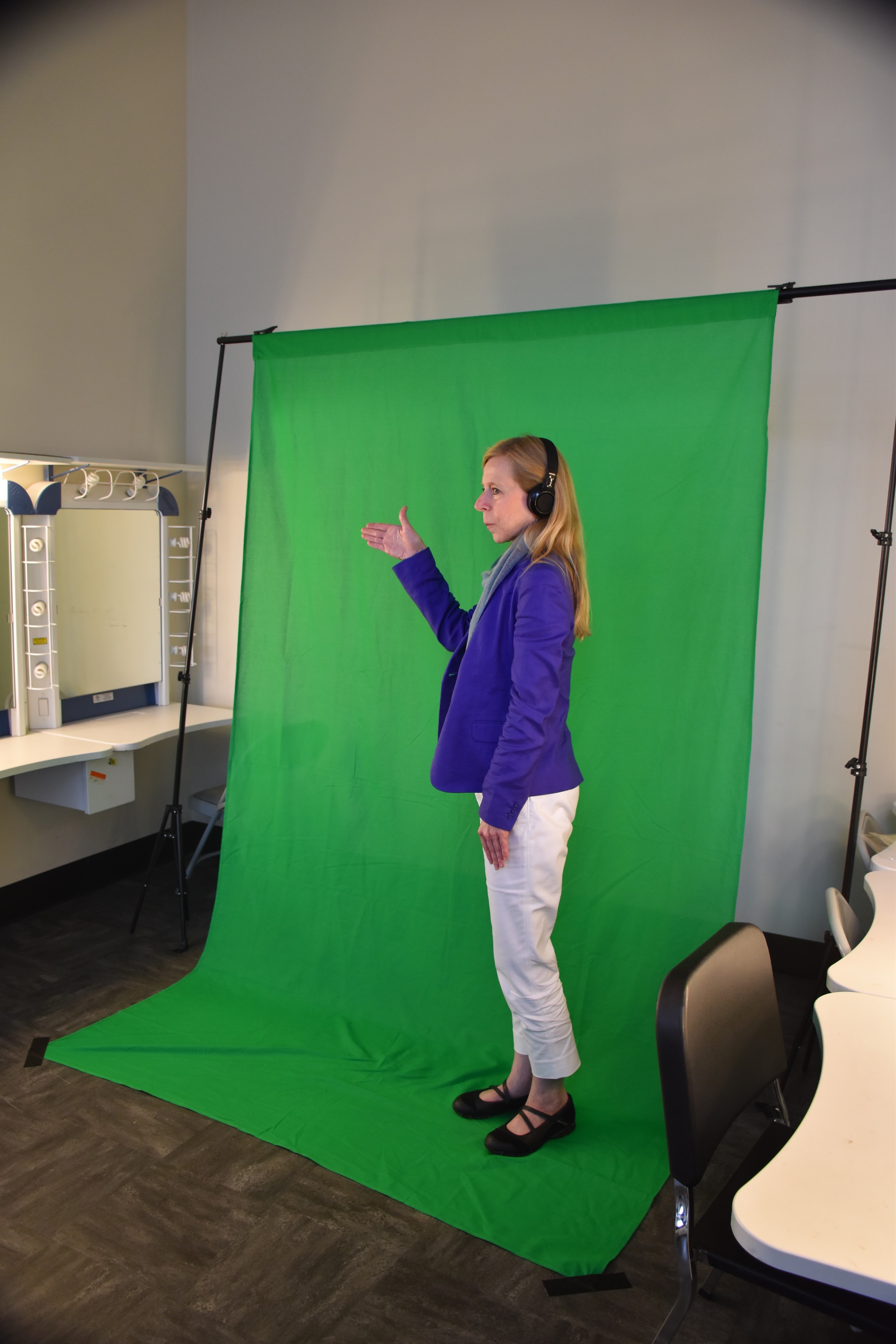
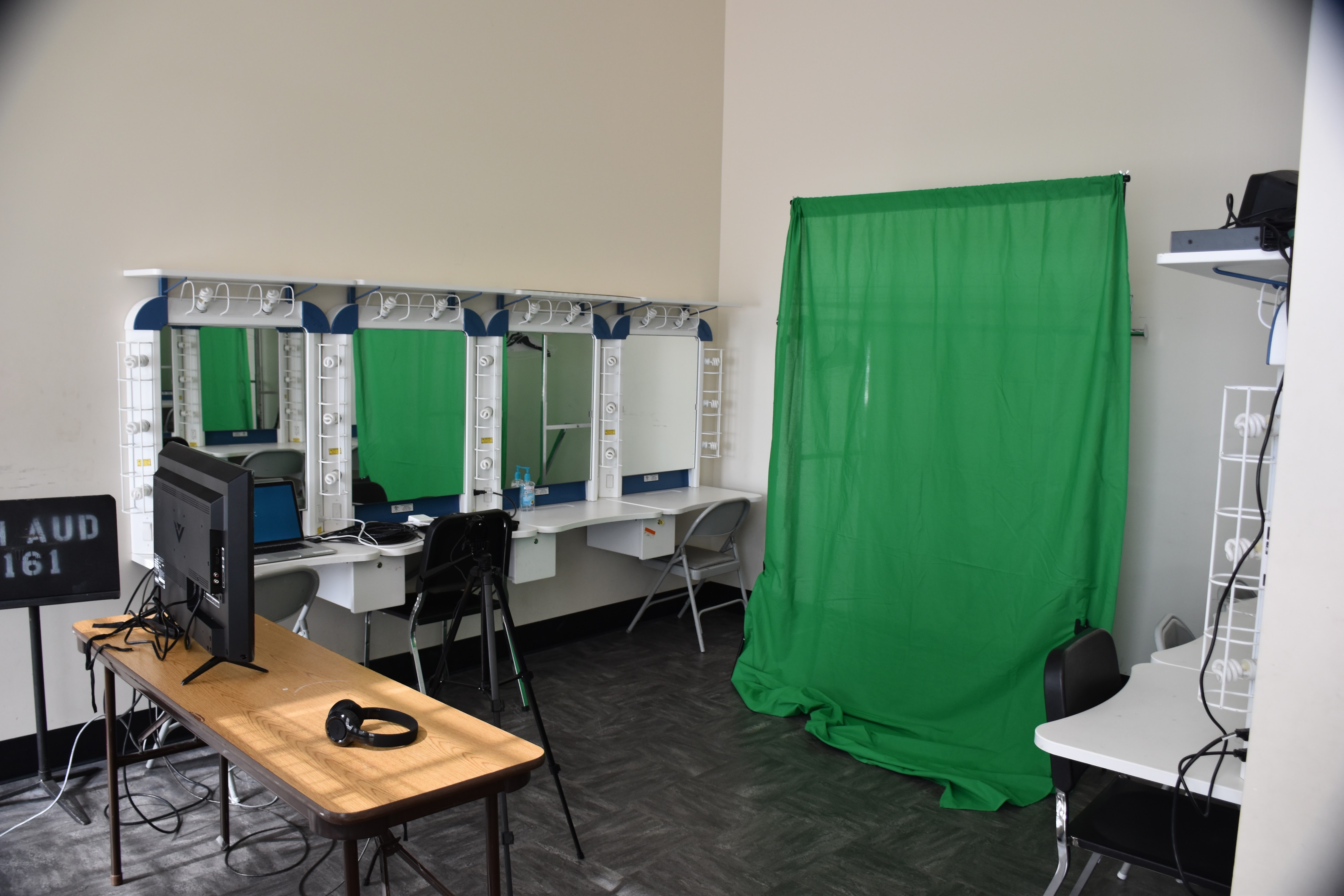
The basic set-up of one of three spaces used in the alpha test of #CdnStudio at the LMDA Annual Conference held at Portland State University.

All photos by Alison Bowie

SLACK CONVO 1

Michael Wheeler Headshot Colour 170Screen Shot 2016-07-20 at 2.47.26 PM

Michael and Sarah

Michael Wheeler Headshot Colour 170mcwheeler

[8:15 PM] So can you remind me again how you came up with this idea?


Screen Shot 2016-07-20 at 2.47.26 PMsarah

[8:26 PM] I have been dreaming about this project for the better part of two years. The balance of the time was spent trying to find terms of reference to explain my dream to my colleagues. At several points along the path I abandoned hope. My desires far outstripped my technical acumen and it was only through a kind of patience, that has been a major part of SpiderWebShow’s success, that I was able to hold on.

The project began to coalesce over a meal at Aux Vivres in Montreal where I drew on a bunch of napkins with Alison Bowie and her partner Zac. From this conversation, they were able to think about some of the basic tech specs that could move us forward to granting requests.

DSC_0300 (1)
Alison, Michael and  Jess Drake (Portland’s Hand2Mouth Theatre) in the first successful, 3-person test of the DCS.

Michael Wheeler Headshot Colour 170mcwheeler

[8:33 PM] So once you had a basic understanding of what it would involv e- what were the steps you took, (dare i call it praxis?) that made it come into being?


Screen Shot 2016-07-20 at 2.47.26 PMsarah

[8:26 PM] In practical terms, #CdnStudio took root when I was able to find enough prose to put the concept into place for my colleagues and financial supporters, most notably CIRA. This exercise, which traveled through a series of steps, finally landed me in a conversation with Joel Adria, who shared a set of experiences which allowed he and I to speak with a kind of shorthand. Joel is the glue.

Putting together the fundraising video for the project with Camila Diaz-Varela and you began to more fully clarify the concept. It is really gratifying to note that all who have seen the video really see what we are creating and get how important it is for a country like ours.


Michael Wheeler Headshot Colour 170mcwheeler

[8:33 PM] So given all of this – it was a bummer you couldn’t come to Portland for #LMDA16 with us to test it out for the first time. I feel like directing the World Premiere of a Hannah Moscovitch play at Stratford is a legit excuse tho.  Were you nervous sending it off without you?


Screen Shot 2016-07-20 at 2.47.26 PMsarah

[9:03 PM] LMDA was one of our first financial contributors. They helped us through the Bly Creative Fellowships. If you are dramaturgically minded I suggest you check out the organization and see what support there might be for your dreams.

I’m excited the first test of #CdnStudio was a success. I think of it as one of my brain children. I am really proud of its first steps into the world. I am also fiercely grateful to my colleagues for keeping their ears and minds open as I worked to make this project clear.

For a generation of performance creators suffering from FOMO, #CdnStudio is going to be a big part of the solution.

**********

DSC_0245
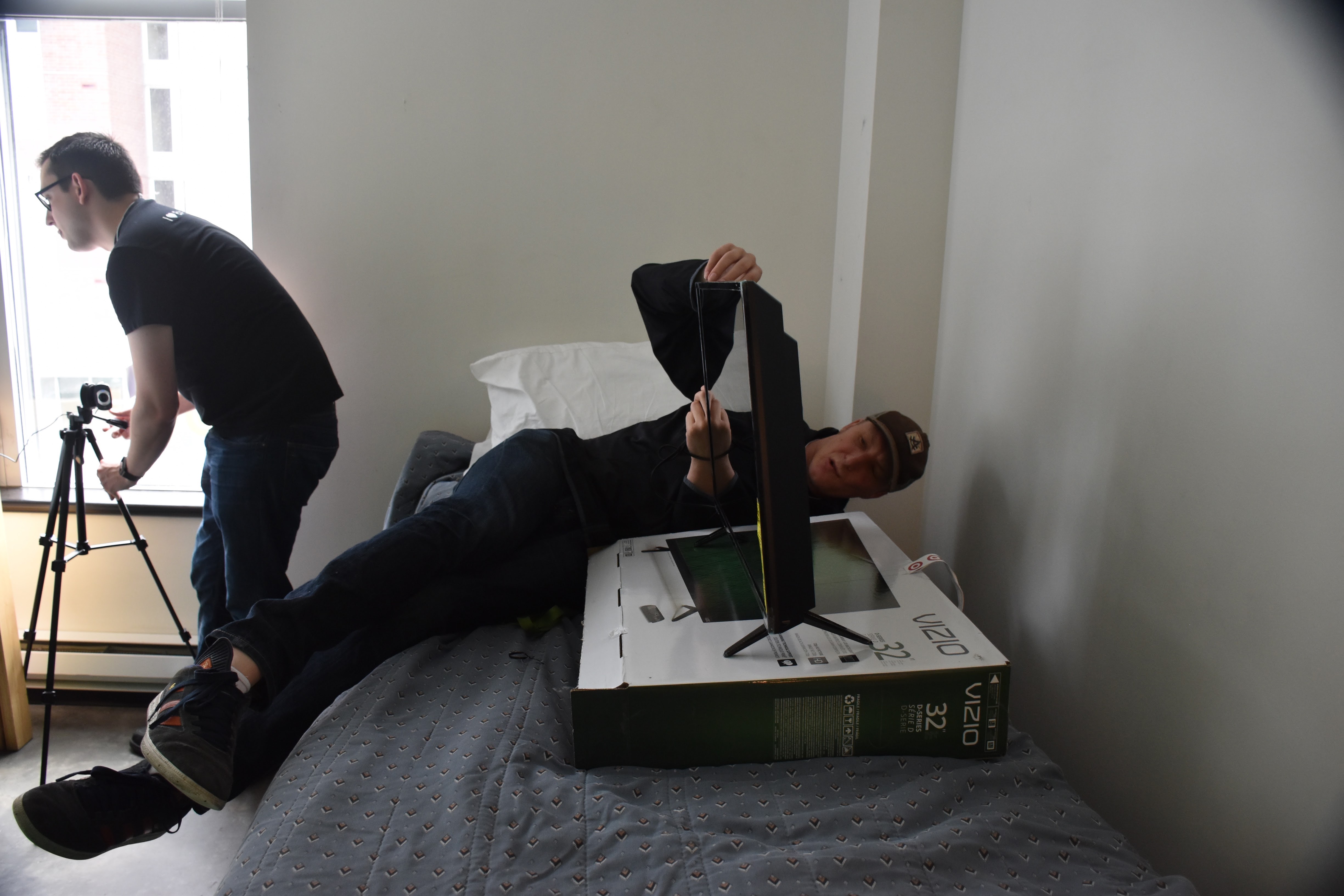
Michael and Joel try out a test in the dorms the day before the alpha test at the university.

SLACK CONVO 2

Michael Wheeler Headshot Colour 170Screen Shot 2016-07-19 at 10.58.59 AM13428357_10101448660325701_2227102687280869306_n

Michael, Joel, and Alison

Michael Wheeler Headshot Colour 170mcwheeler

[8:12 AM] Oh hey guys. My 1st day off in a million years and i forgot to start this convo we promised to have on Slack about how everything went last week.

[8:14]

1 week ago we met in Portland, Oregon and presented the 1st prototype of the Digital Creation Studio to #lmda2016 . What are your thoughts on what the heck happened there? Did I imagine it-  there are photos so I guess not.

[8:19]

One of the most interesting things to me was the irony of two truths that emerged:

1 That we were there to demonstrate the capabilities and potential of a new technology that would allow artists to collaborate with each other on performance over long distances over in a virtual shared space.

2 The three of us, who had never occupied the same physical space before  had to travel across North America to come together physically for the first time to make it happen.


13428357_10101448660325701_2227102687280869306_nabowie84

[12:56 PM] Nice! A day off! I am on lunch break from the Circus and Its Others conference at Concordia. Switching modes here.

Our presence together, and the continued collaboration of the entire SpiderWebShow team, demonstrates that it is possible to develop ideas and do a great deal of work without ever actually being physically together.

[1:05 PM]

I am excited by the possibilities that this technology can bring to Canada and Canadian theatre.

[3:20 PM]

Our meeting also emphasized the importance of relationships, particularly visceral, embodied relationships. We were able to hash out plans, instantly react to ideas or solve problems that arose quickly and together. Nothing is going to replace that experience. This technology, however, can enhance and continue relationships – and foster new ones.

Screen Shot 2016-07-19 at 10.58.59 AMjoeladria

[7:27 PM] Sorry I’m late to the party. I worked with Sarah Stanley on Helen Lawrence as part of the video team, so when she started explaining her idea for a virtual rehearsal hall, I really understood where she was coming from. We explored space, virtual and physical in very unique ways on that show, and CdnStudio is a very similar exploration.

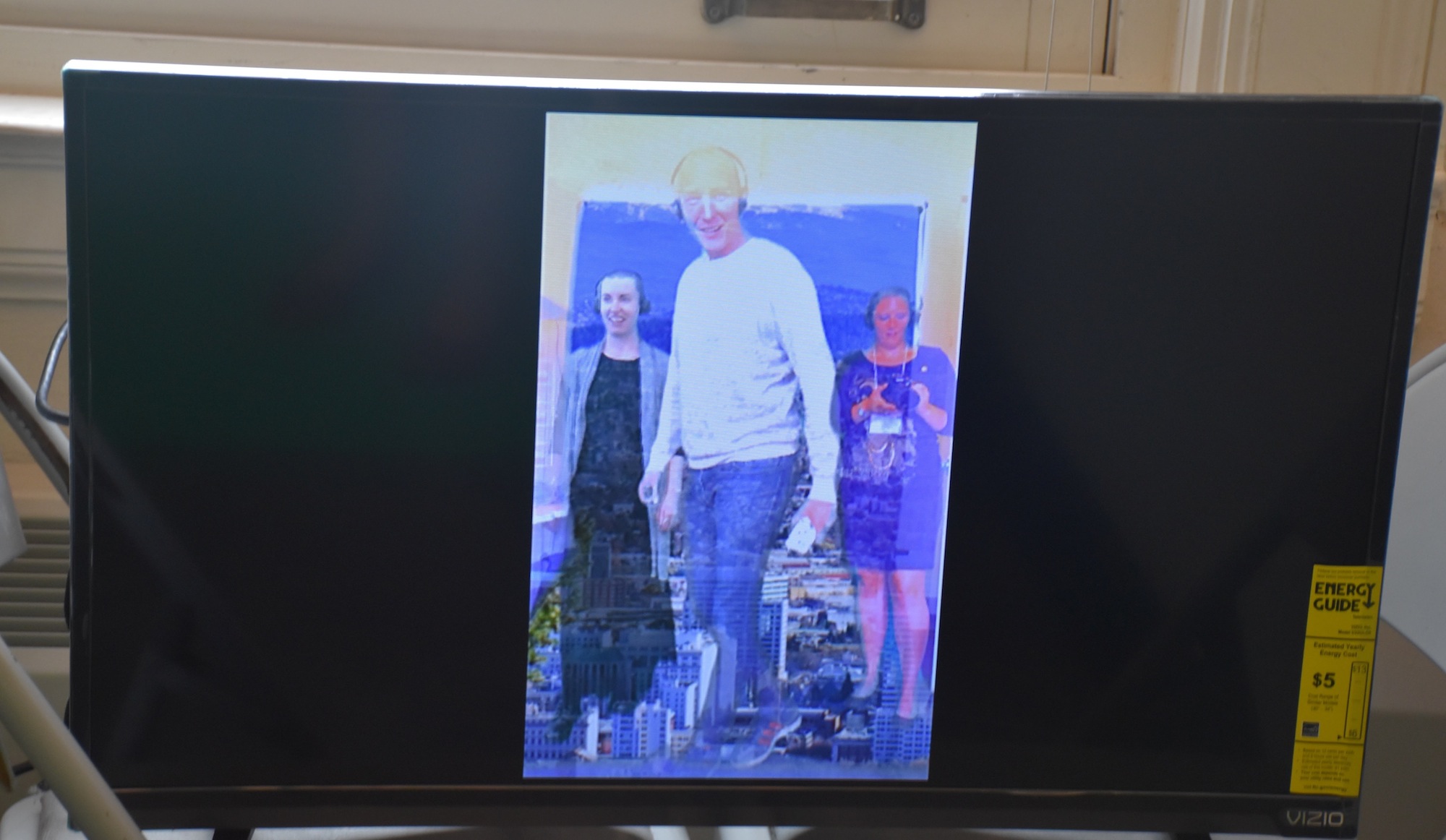
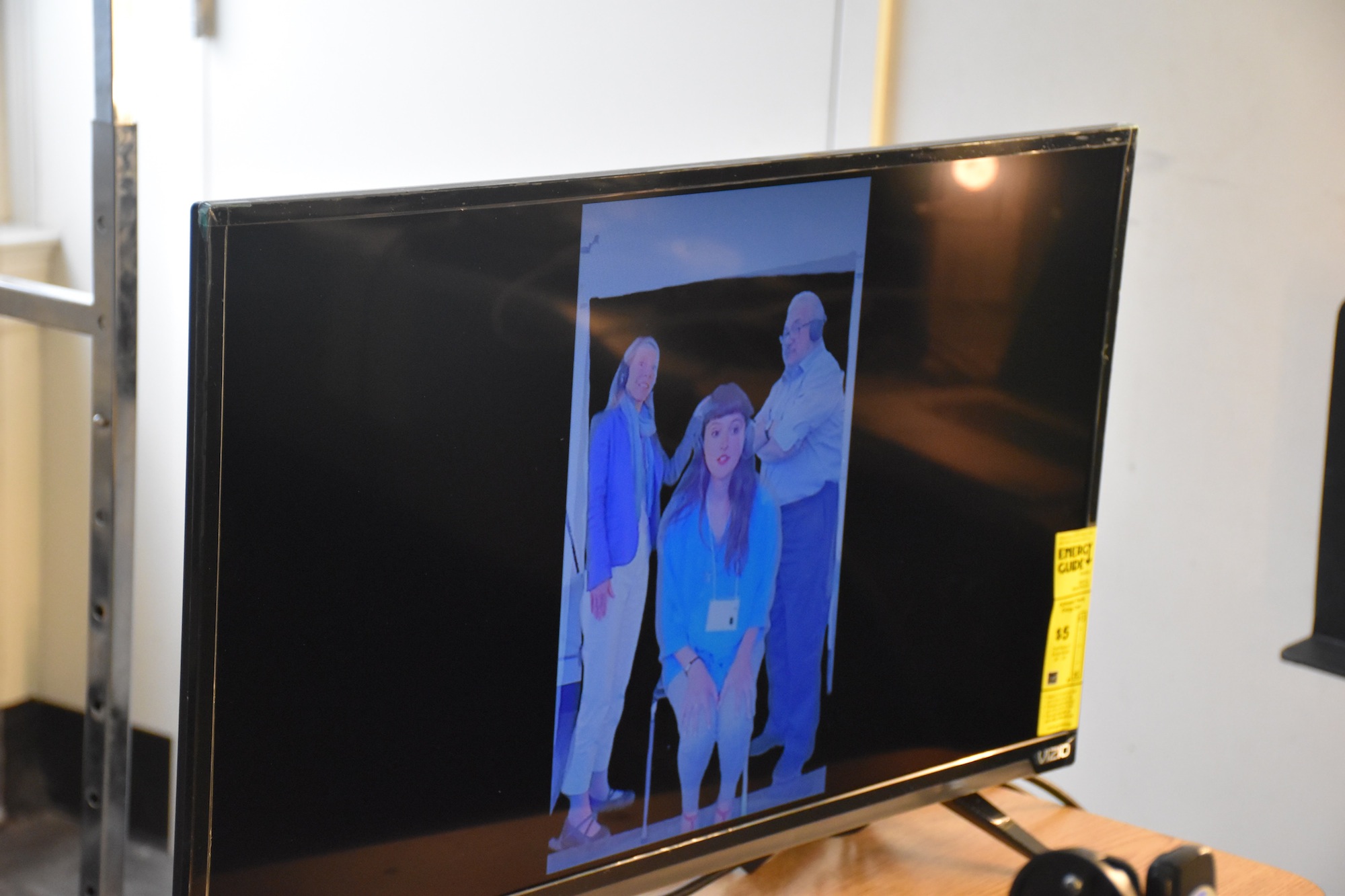
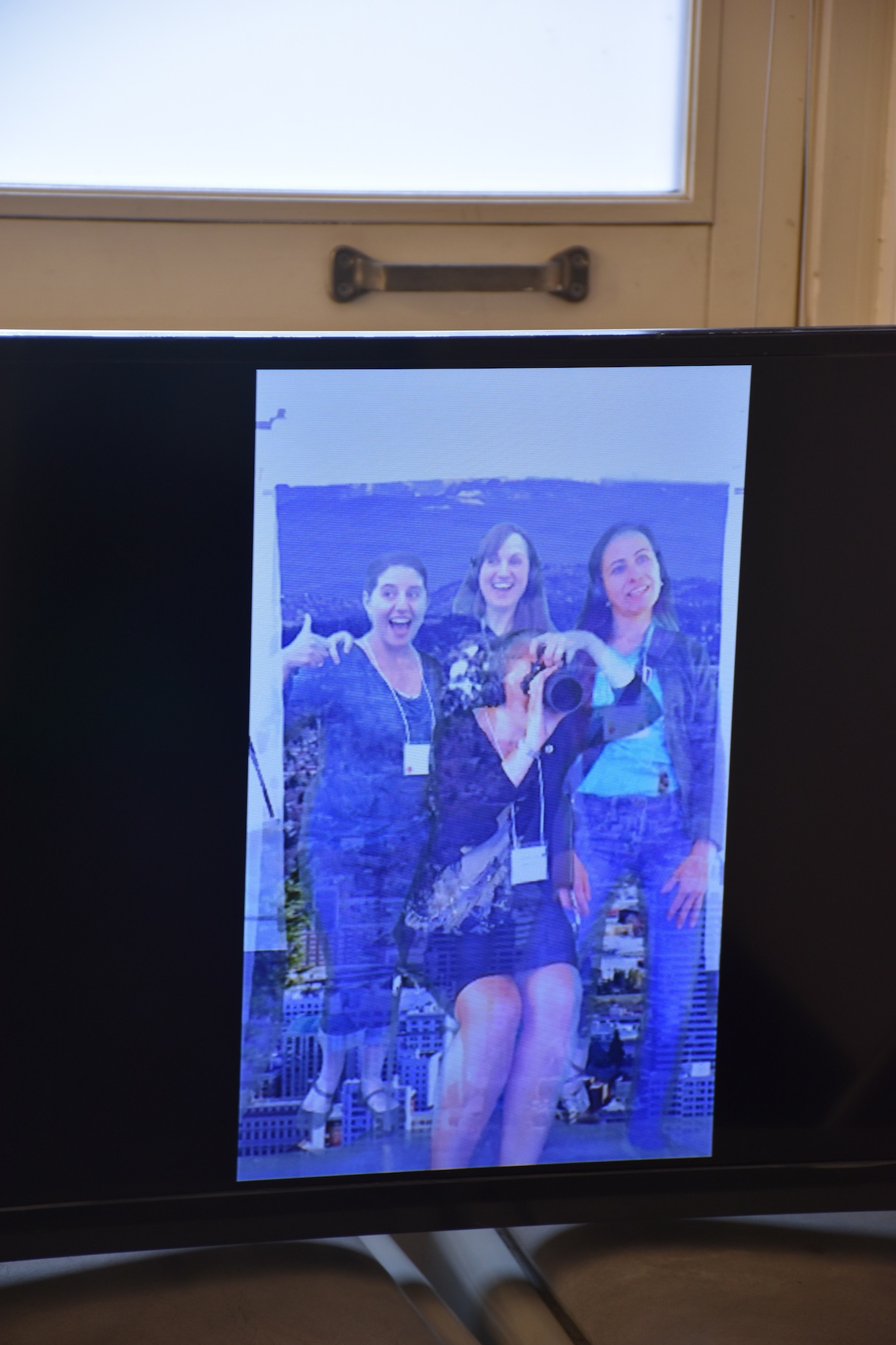
DSC_0021The goal with #CdnStudio is to create a digital creation studio, a virtual space online for theatre artists in geographically-diverse locations to meet and rehearse. The best way to describe it would be a high-tech Skype call or video conference, but instead of seeing an image of a person’s face, you see a composite image of everyone who is participating in the same frame.

To achieve this, we use green screen or chromakeying technology. Just like a weatherman who points at a virtual weather map, CDNstudio composites the other members of your team onto your screen in real-time.

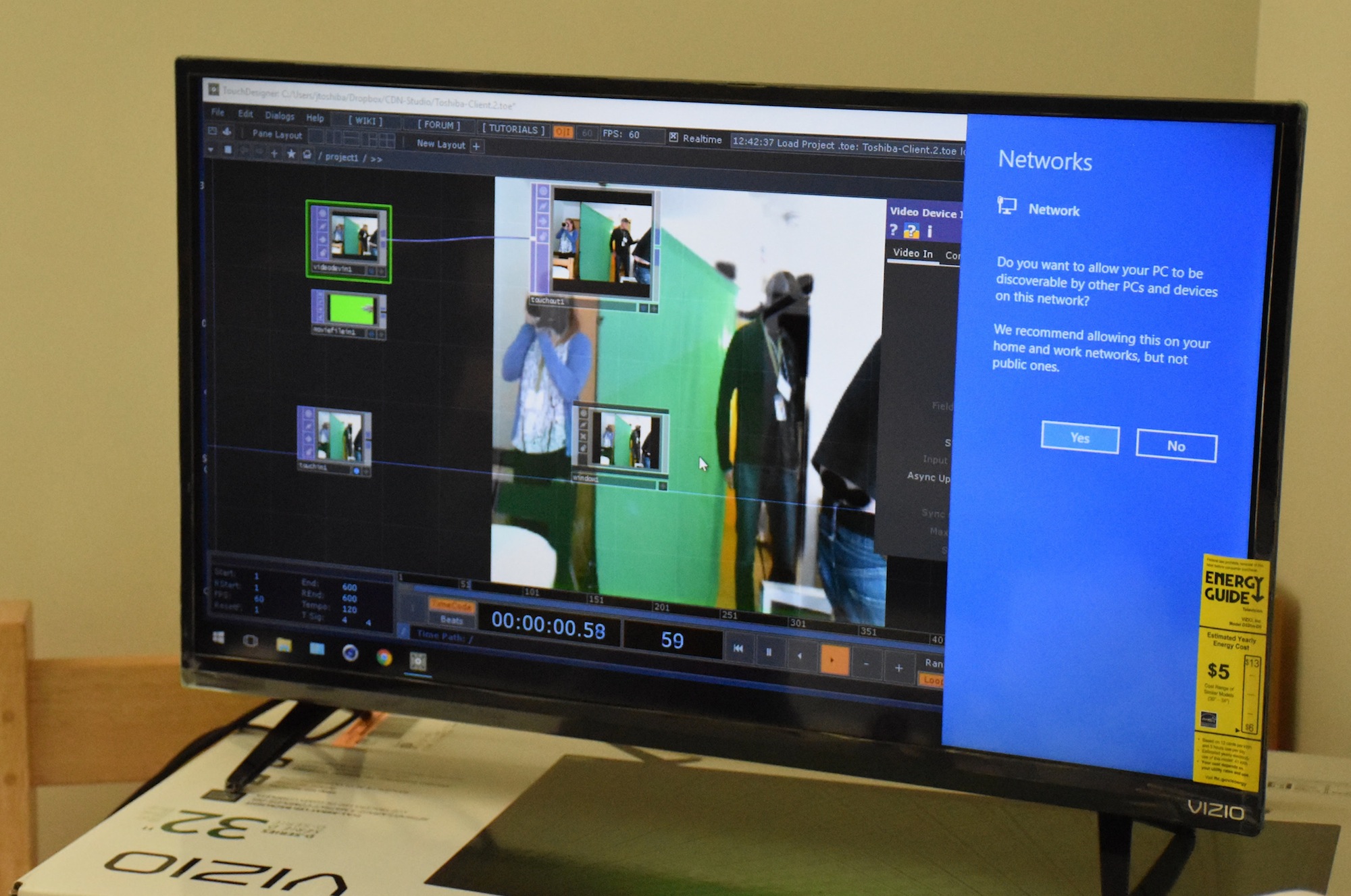
I had spent some time developing the prototype software using a tool called TouchDesigner, but this was the first physical deployment with all the pieces in place.

The prototype is not using the Internet to communicate quite yet, but we are routing all of the information in the studio call over a local network. Our goal is to scale the technology using a new open standard called WebRTC. In the future, this will allow you to join a CdnStudio session from any compliant web browser.

Once we’ve finished development of this web service, all you will need to join a studio is a high speed Internet connection, an inexpensive green screen kit, a webcam, and a set of headphones.

We setup three stations in separate rooms at LMDA, and were totally thrilled with the reaction. Delegates’ lined up outside the dressing rooms where we were setup, eager to see how CdnStudio worked. It was wonderful to get everyone’s gut reaction, to hear the casual expressions and comments as they first step into the virtual space. Friends and acquaintances were quickly shaking hands with their virtual partners, or making attempts at high-fives.

While we’re still a ways away from creating a Holodeck for theatre artists to collaborate in, this first prototype is an exciting step on this path. Our goal is to continue to improve the experience as technology becomes available to make it as immersive as possible.


DSC_0022

13428357_10101448660325701_2227102687280869306_nabowie84

[10:19 AM] When our artistic director Sarah Stanley first spoke with me about the CdnStudio project, the idea was not even fully formed — it was merely a seed that stemmed from Sarah’s thoughts on the internet in general. She explained that the internet allows us to be whomever, or whatever, we want. It is a space of inclusion and possibility. The CdnStudio is exactly that: an inclusive and accessible space for the creation of art and identity.

DSC_0027SpiderWebShow’s mission is to engage with the conversations surrounding Canadian theatre identity and theatre’s intersections with technology. Our work thus far has focussed on post-creation, on conversations about work that has already been on stage or seen a public, and on the people who have created that work. Now we have the opportunity to engage in the creation process and to foster the development of new Canadian dramaturgies.

One of the things that I said in our LMDA presentation last weekend in Portland, Oregon that seemed to resonate strongly with the dramaturgy community there and also theatre practitioners back home was, “If an artist from Nunavut can collaborate with an artist in Toronto, what stories can they tell?” Canadian theatre is very much produced locally right now, whether that be in larger city centres where artists tend to migrate towards, or in small communities where local artists live and work together. The reasons for this include: the expense of travel, time to travel, the connections and relationships that have not yet emerged, and more.

So what happens to the stories in our country, and our understanding of Canadian theatre, if we remove those barriers and if we make national storytelling possible? What will that look like, sound like, feel like? What will change? Another technology that we are currently using is a mapping tool that tracks entries on the PerformanceWiki to geolocate where artists live and where stories are being created.

One of the questions I will working on in the near future is how to visually map stories that are being created in multiple locations simultaneously – and how to track performances that may only exist in digital space. I am interested in finding ways to view the transformation of the map over time. In other words, being able to see it two months ago, one month ago, now, and in the future. This will allow us to see how CdnStudio is affecting the theatre geography in Canada.

CdnStudio is also going to bring up a lot of questions about embodiment and liveness, elements that are fundamental to our understanding of theatre right now. We’ve got a lot of work ahead of us, but what we’ve done already is amazing – so I can’t wait to get started on the next phase!

DSC_0235
We kept the stickers on the TVs so we could return them when we were done.

Screen Shot 2016-07-19 at 10.58.59 AMjoeladria

[7:27 PM] I was astonished by the amount of excitement, attention and enthusiasm there was for the project. In getting the installation setup and “dialled in”, it was really great to establish what worked and what didn’t. For example, using cameras in portrait was effective to capture full bodies — this gave a sense of physical presence that a FaceTime called might not capture.

We learned that 4’x4’ footprint that we were working with was a bit small, certainly in order to do any sort of real blocking or arrangement. There was some clear feedback regarding the distinct challenge of seeing yourself act, in addition to the challenges of having your eye line glued to the screen. The wireless headphones were by far the most effective technologically, but also in terms of their ability to immerse the participant in the experience.

Michael Wheeler Headshot Colour 170mcwheeler

[10:42 AM] Yah, I have to say, and I rarely do say this, but it actually exceeded my expectations  –  the results of what we set out to do. At the final banquet of the conference, a theatre artist who had volunteered to man the doorway to the dressing rooms where we had set up stopped me to tell me:

“Wow – I have to tell you, everyone lining up to get in had a glum look on their face. But everyone who came out was lit up – like they had just been on a roller coaster or something! Great job. Congratulations.”

So there are a lot of things to figure out still with the technology, but the experience really reassure me we are on to something we really need to keep pushing.

JOIN THE DIGITAL CREATION STUDIO – CLICK HERE NOW TO BE A PART OF THE DIGITAL REHEARSAL REVOLUTION


Rage-ing With and Against The Machine

Me dancing at the Biltmore Cabaret. Image taken by Mats Schram.

MUFFINS. The food of true artists, as I was told in dance school. This lesson— I choose to remember. I sit with my favourite Morning Glory at my everyday cafe after dance class. Laptop aglow. I work hard on this muffin top. So moist.

I muse about my relationship to technology in live performance, as a contemporary dance artist. I have spent the last few years integrating multimedia (ie. computer-generated light, sound, projection) into my work through collaboration with media artists. There’s many reasons to become competent with multimedia design on my own. It would substantially expedite my creation process. I would fight less with my collaborators. The technology and tutorials are extremely accessible. The field is in desperate need of more female representation. Not to mention, if you Google Jobs That Pay $100K a Year Without a Degree, you’ll find multimedia artist comes up as sixth on a list of thirty-five. Despite this, I am aware of my innate apprehension to becoming multimedia-savvy. A subtle but relentless waft of aversion.

SEX. I realize now I prefer to write about sex. Maybe I can meander my way from technology to my preferred topic. Facebook friends chimed in on my wall with ideas. Many offered up suggestive descriptions of banal tasks, like “plugging in” USB keys, or “turning on” electricity. Techroticism, I’ll call it. Aside from the innuendo, people seem to believe that technology is mostly about sex anyway, that our interactions with it are laden with sexual gestures and motifs. Wait. Does mere sex simulation = sex? Seems a bit lacking in pleasure, not to mention interpersonal intimacy. I think about sex toys. Cutting-edge sex toys. Future sex technology will obliterate the limitations of the human body, offering up the possibility of super-orgasms, eternal libido, long-distance stimulation, body-hacking, sensation-exploding, choose-your-own-anything. Everything. For some reason, none of the above makes me wet. Not even moist.

Josh Hon and Natalie Gan doing a Fitzmaurice-inspired warm up prior to his artist talk at Centre A Gallery. Image taken by Christian Vistan.

BODY. I hosted an artist talk with acclaimed Hong Kong visual/theatre artist Josh Hon in Chinatown’s Centre A Gallery. Days before, we sit at a cafe with muffins. We talk about creating and experiencing work that has “heart”. We ask each other what that means, and that leads to a deeper conversation about embodiment.

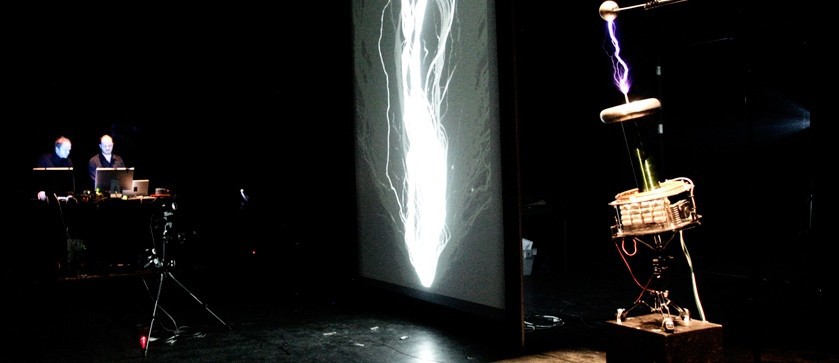
I see how multimedia innovation will replace the need for the human body as the site for expression, which I can’t help but lament. I think of this when at the MUTEK Cabaret as part of the International Symposium of Electronic Art (ISEA) in 2015. I watch high-voltage electromagnetic arcs surprise and stir me viscerally. I also watch the performing bodies on stage hovered over wires and remotes, hidden behind computer screens. I think: Can multimedia evoke embodiment better than the body? It’s a self-absorbed corporeally-centric question, but let me provide some context why.

I was put through the wringer of formal dance education, where bodies are generally trained to be efficient, consistent, machine-like, all-competent, fully-controlled. This left a couple of things out of the picture— namely, questions. Questions like: What is my curiosity? Where does it sit in my body? Who’s dance am i dancing? It took four years into post-secondary studies before I even began noticing the terribly white, colonial, exclusive history of the dance being taught. What contemporary dance training taught me was how to hide, how to feel shame about my body, and how to dance in the Palace of dead white folk.

Years later, my work as a dance artist is to un-learn. To train out the machine. To decolonize my thinking, and reclaim my body. To do so, I practise drinking, smoking, and then dancing madly in clubs to explore: 1) excessive cardio and duration 2) performance of gender and sexuality 3) improvisation with and against the beat of 90’s R&B 4) finding and then losing myself. My practice includes a warmup inspired by Fitzmaurice Voicework, where body, breath, voice, imagination, language, and presence are accessed. Fitzmaurice places the body in positions that elicit “tremors”; these encourage a destructuring of the breath, and a restructuring and strengthening of the voice via vulnerability. My practice includes sex and being seen. It includes a cocktail of contact improvisation, somatic practice, and presence work in order to be available to impulses. All this with the intention of being more available to collaborators, to audiences, and, to partners in coitus.

Given the mechanized, automated body I’m trying to shed, I can see where my aversion to slouching into a computer-based practice might be stemming from. Considering the energy I commit to embodiment, I naturally resent the idea of bodies being replaced by technology. And I probably despair of my own body becoming obsolete.

POWEr : audiovisual performance by Alexandre Burton and Julien Roy at ISEA in Vancouver 2015.

FUZZ. You know what happens to me, when people start getting into dirty technology talk? Gushing about software, programming, new gadgets? I zone out. In a society that is mediated and reliant on computers of all shapes and sizes, I think about how this is atrophying our bodies, our public and private spaces, our minds. My mind gets claustrophobic with fuzz— the fuzz of being plugged in, but taken out. Taken out of my ability to be with me and to be with someone else. Not only does it then take much more energy to engage in my somatic practice, but it also just feels damn unsexy.

PRESENT-NESS. I think about about innovation in performance. I think about the present, not the future. Maybe this is my downfall. Maybe this will make me the first to be replaced by a robot vacuum. But as a dance artist and as a human, I’m enamoured with the body, its histories, and its limitations. I am deeply preoccupied with the quality, frequency, and texture of the moments we can have together now. Sometimes I feel like it’s the most radical and healing thing we can do.

I am not denying that every aspect of my art-making process is made more efficient with technology— from the grant-writing, to the video editing, to the thirty-minute load-in on opening day. I am not denying that technology allows me to find and connect with people. But here’s what I know. Technology has yet to make me better at sex. It hasn’t made me better at being vulnerable and intimate with someone. What has, is my daily efforts to decolonize my practice and reclaim my body. I will continue to play nice with technology in and outside of my creative work— I have little choice. In Adrienne Wong’s words: the robot revolution is inevitable. But until the robots start parading in to take over, I resist becoming one.

Performativity and Pokémon GO

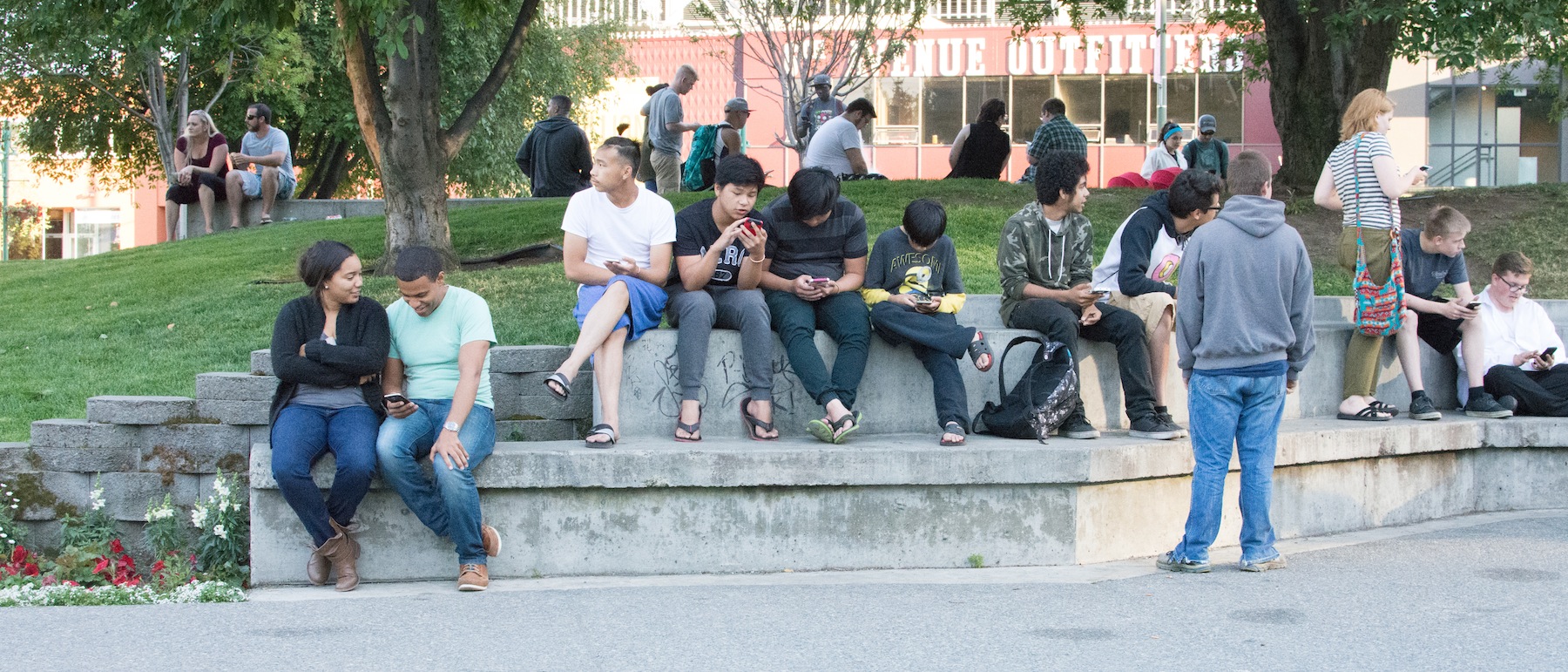
Pokémon_Go_players_in_Anchorage,_Alaska

I really want to play Pokémon GO.

The augmented reality game was released on July 6th in the United States, Australia and New Zealand and, as of July 13th was a more popular use of the internet than searching and viewing porn. It has more active viewers daily than Twitter and Tinder. As of July 13th, that’s 9.5 million daily active users. This is big.

The game is essentially a scavenger hunt where players collect creatures or items that will increase their success at capturing creatures. And the creatures evolve into more valuable versions in relation to the distance players walk.

Instead of doing this in an imagined, on-line world, Pokémon GO transposes game play onto the real world using augmented reality. Players, or “trainers”, are guided by a map to travel their real-life bodies to real-life locations where they pan their smartphones around in the hopes of catching a glimpse of a charmander or spearow.

Theatre is the original augmented reality. We take the darkened room, which we all agree is merely a darkened room, insert imagined figures, and push those figures to compete, help, or hinder each other.

This is the kind of theatre that I love, the kind that never asks you to believe for even one second that the stage is not a stage. The theatre that tickles the brain by inhabiting the real world and the fictive world at the same time. Unapologetically.

Last week, while walking through the Boston Commons I passed a cluster of three young men, smartphones at the ready. “Pokémon Go!” I whispered to my travel companion. “How can you tell?” he asked.

It was a combination of things: their out-of-placeness, steaming in the humid heat; the smartphones present but not in use at the moment, no photos or texting or instagramming happening. But there was also an air of adventure, that they were like the kids in Goonies, on the hunt for something good.

This is what attracts me most to the game: the possibility that it will bring individuals out of their homes and offices into the streets to engage with the city as pedestrians. Some might argue Pokémon GO players are not really engaging with the city because they are focused on a screen. But they are still moving outside of the day-to-day routine, and once out of the day-to-day, well, anything can happen. Just ask the players who’ve found dead bodies (yes, more than one). Or the “trainers” who’ve conquered crippling social anxiety and managed to leave the house to capture magikarps.

If you watch the news at all, the city streets – especially in the US, especially if you are not white – have never seemed more dangerous. And yet thousands of people are wandering the city and not really paying attention. Is there an assumed sense of safety because one can’t really get hurt in a video game, even if one’s avatar loses all its heart points? That is the confidence that opportunists who lure Pokémon trainers to isolated locations are counting on.

pokemonGO

And we mustn’t forget that not everyone is playing Pokémon Go. As Mary Flanagan writes in Critical Play: Radical Game Design, participants in locative games in public space often come from specific socio-economic classes, those with enough resource to own a smartphone with a significant data plan and battery power, and considerable leisure time.

Ultimately, players of Pokémon GO are taking on roles and those roles are emboldening, inspiring, and driving them to action. The city is no longer the site of day-to-day transactions and travel: it is now the setting for adventure. As gamers move away from static positions locked to screens and into physical intervention in the real world, their role expands from player to performer. They are performing actions, interacting with other players, and – knowingly or not – are watchable. And trust me, you’re being watched (unless you’re Justin Bieber).

Beyond directly participating, bystanders are also implicated in the performance of Pokémon GO.

I think the men I saw in Boston were Pokémon trainers, but they may not have been. But it doesn’t matter, because the possibility was activated within my imagination. So without even having engaged in the work-around necessary to download the game to my Canadian phone, I’m already playing. I may not be looking for whatever those birds are called, but I’m looking for those who are looking for them. My attention to my surroundings is heightened, and especially to anyone wielding a smartphone.

I’m an audience in search of a performance.

My travel companion remarked that Pokémon GO has rendered iconic the physical gestures associated with playing the game. In the same way that bringing an object to one’s ear reads as “phone”, now scanning the environment with a smartphone reads as “Pokémon”.

There have been augmented reality apps before Pokémon GO and there will be more to come, but this particular one has tipped the scales into mega-popularity. The game-play not only taps into our innate drives to collect things and WIN, but also popular cultural nostalgia – and those pokémons are so cuuuuuute.

Theatre makers dream of this level of public engagement and of breaking into popular consciousness so thoroughly. I’d be satisfied with a fraction of the participants, a tiny slice.

The success of Pokémon GO is more than what David Shields calls reality hunger, the collective desire for real stories exemplified by This American Life, reality television (however deftly edited), verbatim theatre, documentary theatre, and the slew of “this is my story” one-person-shows.

Pokémon GO is engagement with the real in search of the imagined. It is a role-playing game that brings together the dual identities so many of us occupy: our on-line and real-world selves.

The game provides the elements of drama: setting, conflict, and an evolving quest-narrative that motivates the players, each one the protagonist of their story.

For their part, the players have everything actors need to play a role: a character (or avatar), an objective (collect and evolve your ménage-à-pokémon), and obstacles (other players and navigating the city itself).

The game is a fluid, on-going performance not only for those engaged in playing on their mobile phones, but also for those of us watching from the sidelines in real life and on the web.


#CdnCult Volume 7, Edition 6: DIGITAL PERFORMANCE

Last month, Elon Musk (whose current projects include Hyperloop trains, Tesla electric cars, and Space X missions to Mars) stated it was more likely than not that humans are living in a computer simulation. The argument is that humans are either going to go extinct, or will survive. And if we survive, given advances in virtual reality, the expansion of processing speeds and digital storage, and our taste for simulation games, we must be in a simulation now.

That’s a lot of givens.

Musk’s argument, and the cascade of responses from tech industry heads, speaks to the ongoing love affair humanity has with technology and the possibilities that technology create.

At SpiderWebShow, we are, obviously, head over heels. We are in deep.

In this edition of #CdnCult, SpiderWebShow Co-Creators Sarah Garton Stanley and Michael Wheeler discuss with dramaturg Alison Bowie and technologist Joel Adria the first test of #CdnStudio – our online rehearsal hall designed to connect artists in different cities within one creative space. Choreographer Natalie Gan discusses her relationship to technology, decolonizing practice and the body. And Adrienne Wong examines the performative aspects of the latest digital sensation, Pokémon GO.

What is performance in the digital age? Probably a lot different from what it was even 10 years ago. Would theatre-goers from the world before the use of electric light recognize the form that is pervasive now from 50-seat black box houses to proscenium arch theatre for the multitudes? Probably – but it would be much different than anything they had seen before.

PlayME Summer Short Series: Betting on Death

Fonso Morelli likes to bet on horses, but always loses. He is in line for an inheritance but his Zia Gena refuses to die. Fonso comes up with plans a. b. and c., which all fail.

Written by Vera Constantineau, performed by Tony Nappo.

PlayME Summer Short Series: House

What if the walls could speak? House tells the story of a home and the people who have lived there.

Written by Chris Nash, performed by Barbara Budd.

#CdnCult Times; Volume 7, Edition 5: MORE CANADA

View “I Remapped Canada” on imgur

There’s been a lot going on in the past few days, have you noticed?

Maybe you were celebrating Canada Day, or Independence Day. Maybe you were marching with PM Trudeau in the Pride Parade. Or maybe you were exercising non-violent civil disobedience and sitting-in with the Black Lives Matter protesters. Or maybe you fasting for Ramadan. Or waiting by the phone to hear that loved ones are safe after multiple attacks in Baghdad, Istanbul, or Bangladesh.

I’m sorry, did we just go there? This is a magazine about theatre, after all. Do we need to talk about ISIS attacks?

Yeah. Yeah, we think we do.

People – all people – do things because they believe in things. And yes, yes, we don’t all believe in the same things. And yes, yes, killing is bad. And so is racial profiling and racism. The TYA show in my gym in grade six taught me that ages ago.

So what does this have to do with theatre, again?

From where we’re sitting here at #cdncult, we see our community of theatre makers and supporters working hard to grapple with legacies of colonialism and prejudice. And we are proud of those who are asking the hard questions, and those who are trying – sometimes failing – to answer those questions. And those who embrace the multiplicity of answers and perspectives that make up a healthy and vibrant community.

US President Barack Obama says that the world needs more Canada. Well, we say that the world also needs more Canadian theatre and the many overlapping and interlaced voices it represents.

In this edition, Toronto playwright and actor Andrea Scott reflects on the how African-Canadian voices and stories have emerged within Canadian theatre; Vancouver director Milton Lim calls on us to make room for a diversity of form, as well as experience; and Jillian Keiley, Artistic Director of English Theatre at Canada’s National Arts Centre responds to the recent allegation that Canada doesn’t have a national theatre.

If “more of Canada” means making room for more voices, more ways of doing, more ways of seeing, then yes, the world could use more of Canada. Canada could use more of Canada, too.

Can You See Me Yet? A Meditation on Canadian Theatre

Young black woman in simple midevil clothing, looking over her shoulder.
Girl with the Bamboo Earring by Awol Erizku.

2016

I’m writing this on Canada Day as I travel to Shaw in Niagara-on-the-Lake to see Master Harold and the Boys, directed by Philip Akin, and Adventures of a Black Girl in her Search for God, a GBS story adapted by Lisa Codrington. This is the perfect weekend to reflect on the state of Canadian Theatre and how it has evolved. I will attempt to show its ephemeral nature by looking at it from my perspective as a London, Ontario native who started consuming theatre in 1986.

1985-1989

London was a place where I was called nigger and coon on a regular basis; that’s just how it was in the pretty town nicknamed the Forest City. I was used to being excluded but I chalked it up to my being a weird kid. Not a weird black kid, just weird. I collected rocks and read ‘Wuthering’ Heights in the old English. Being perceived as an outsider makes you a perfect candidate for the arts but it wasn’t until high school that I found an outlet for my peculiar desire to ‘live out loud’.

I attended H.B. Beal, a technical school, where I was in the Television & Broadcasting program. CanCon (Canadian Content) was being forced down the throats of radio stations in that 30% of their content had to be Canadian. So, while we, the listening audience, would have preferred to listen to 12 hours of Bad Brains, The Cure, Bruce Springsteen, and The Pogues, the CRTC regulated that 3 of those hours had to be dedicated to Gowan, Kim Mitchell, Maestro Fresh Wes and Skinny Puppy, et al. And while it may have felt like being force fed vegetables I’m happy I got to know the music of Amanda Marshall, Gordon Lightfoot, Neil Diamond, and Liberty Silver. Popeye was right: spinach is really good for you.

I became interested in theatre in high school because I had a spare; the curriculum could have used a CRTC-like nudge. My drama teacher taught theatre by making us study ‘Phantom of the Opera’ and ‘Les Miserables’. She taught us about auditioning by performing an interpretive dance to ‘Running Up that Hill’ by Kate Bush. Is it any wonder I was ignorant of Canadian Theatre in the 80’s? Andrew Lloyd Webber probably has no idea where London was on a map in spite of its name.

Thank Heavens for Martha Henry, who, as the Artistic Director of The Grand Theatre, programmed ‘A Warm Wind in China’ by Kent Stetson in her first season at the company – a play about AIDS starring a beautiful 38-year-old actor named Philip Akin, I was engaged completely. I had never seen a black man on stage before, nor had I been exposed to homosexual relationships portrayed so matter of fact; the scales fell from my eyes and I saw theatre as an honest portrayal of real life.

I was foolish. I bounded up to my theatre teacher and told him I couldn’t wait to audition for the next season of plays at our high school. “Don’t bother auditioning, Andrea,’ he said, ‘there are no black parts.’ Well, at least he said it out loud. Eventually my school produced ‘The Crucible’ and guess which role I played? No, not Abigail, but nice try.

1991

It wasn’t until I went to the University of Toronto for theatre that I was exposed to Canadian Theatre in the form of Judith Thompson, George F Walker, Paul Thompson, Michelle Tremblay, Linda Griffiths, and James Reaney. You will notice the lack of diversity but, at the time, I did not; I was used to my experiences being invisible.

Shortly after getting my degree, Djanet Sears won four Doras and a Chalmers for ‘Harlem Duet’ in 1997. It had been almost 10 years since I’d seen a strong black character on stage and now there was more than one. Nigel Shawn Williams, Barbara Barnes Hopkins, Dawn Roach, Jeff Jones, and Alison Sealy-Smith gave me hope. I brought my mother to see the play to prove to her that my desire to become an actor was not folly. A few years later we were gifted with ‘Riot’ by Andrew Moodie, which was also awarded a Chalmers. Black lives on stage were becoming a reality. You cannot truly comprehend how important it is to see people who look like you on stage that reflect your experiences authentically.

1997-2002

But like ‘Waiting to Exhale’, which gave all black people hope, Sears and Moodie were a hiccup and there wasn’t a rush of coloured playwrights given the opportunity to fill the creative void. I auditioned for endless slave roles in Black History Month plays as well as mothers weeping for their dead sons on movies of week. It wasn’t creatively interesting or challenging and I decided to become a lawyer. If I wasn’t going to be creativel I might as well make a good salary, I thought. And then “Da Kink in My Hair’ and ‘The Adventures of a Black Girl in Search of God’ hit Toronto and I re-considered the LSAT.

2002-2010

Amidst the temp jobs, TV guest spots, and great TYA shows at Roseneath and Carousel Players I was given the chance to be in Canadian Stage’s ‘Omnium Gatherum’ where I played a black woman who could not sing a Whitney Houston song (and work with my dream actor, Nigel Shawn Williams) followed by Factory Theatre’s production of ahdri zhina mandiela’s ‘who knew grannie’ where I was allowed to play with Marcel Stewart, Miranda Edwards and Joseph Jomo Pierre. Our last show was on Easter Sunday and I did feel re-born as a creator in Toronto theatre.

2010-2016

6 years later, I am a playwright. I can’t believe there are two plays dominated by black artists at the Shaw Festival. As I sat on a bench outside the Court House Theatre before the show, eyes closed enjoying the sun, I was happy to hear the honeyed voice of Philip Akin approach me, ‘Who’s that brown girl sunning herself on the bench? Hello, Miss. Scott!’ I had come full circle. 28 years later the actor was now a director and the adoring fan is a playwright with her own show opening in four weeks.

For our theatres to change and evolve the people who held the keys to the castle had to step aside and let a new generation of diverse creators make decisions and the results have been glorious. We are lucky to have David Yee, Joseph Jomo Pierre, and Tara Beagan in our midst because they will continue to inspire a new generation to create. To ask, ‘Where is Canadian Theatre Now?’ implies that it is an ever fix’d thing, rather than an amorphous, living entity subject to changeability. Canadian Theatre is us and we cannot be locked into a static identity because to be static is to die.

To quote Maestro Fresh Wes: ‘This is a throw-down, a showdown, hell no, I can’t slow down. …. This aint a game, I’m on a mission.’

Mic drop.


*Can You See Me Yet?a play by Timothy Findley

Why doesn’t (does) (doesn’t) (does) Canada Have a National Theatre?

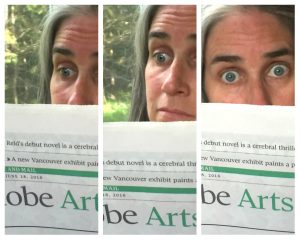
A collage of three images: Jill reading the paper and discovering something with surprise.

I was breastfeeding my three-month old-baby girl when a dear colleague of mine called me up and asked me if I would be interested in co-applying for the job of Artistic Director of the National Arts Centre.

I told my friend quite immediately and without thinking about it: “ absolutely not.” He told me to think about it, and I did. And it seemed then that a lifetime of thinking about it had already gone into that thinking-about-it time.

I had followed the National Arts Centre for years. I was keenly interested in it because I was always interested in what stories and theatre say about a people, about a nation. I had been breastfed myself on Newfoundland nationalism – an unshakeable belief in this place and her people because of the stories I had been told about it. Right out of university, I was hired at the Resource Centre for the Arts in St. John’s – in a position I held for 10 years. The mandate of RCA was and is to promote and cultivate the theatre and culture of Newfoundland and Labrador. It was a fierce and brutal battlefield of a theatre environment because everyone who went through there held that they were now the torchbearers of our secret nation. Almost every theatre company in Newfoundland is dedicated to telling Newfoundland stories. Our island is in a contagion of talking about itself. It fuels our population, makes people who go away want to come back, and people who come to visit stay.

Although I was always a strident Newfoundlander, I am also deeply pro-confederate. I believe in Canada as a nation: in Canada as a nation of nations. I love that we have the system in place to be a country version of the UN, you don’t have to surrender your passport, that you can be an ‘anything-Canadian.’ I love that people live in megacities, by the ocean, and forest, by permafrost and fields. I love that we can’t figure out what our identity is, and it drives me berserk that some of us believe we can be any one thing- the beauty of this place is that we can be anything.

When Peter Hinton launched his inaugural season in 2006, I sent him a letter. I didn’t really know him but I wanted to commend him for programming an all Canadian Season. I was thrilled by it, excited by the caliber of artists he invited, gobsmacked by the variety of theatrical experiences NAC Audiences could expect.

I was really surprised and sad to learn that Peter’s move had turned out to be a brave one indeed and that NAC subscription audiences had dropped like a stone. People had never heard of these artists – they had never been seen on Broadway or the West End.

Peter slowly built his subscription base up again by engaging in Canadian works weighed throughout with more popular international titles. But I saw what that struggle did to his heart as a nation builder and it was that that made me say ‘absolutely not.’

A few weeks later, my friend had to withdraw but the NAC asked if I might take it on myself anyway and I said yes. And I said it with a whole heart because through studying the purpose of the organization and its responsibilities, I came to believe that I could follow the path that Peter had laid and retrace it again with strategies I had learned from him and his predecessor Marti Maraden, from Newfoundland nationalism, from the crackerjack team I was assembling and inheriting, and from my obsessive study of Canadian theatre.

The NAC is a theatre that is dedicated to celebrate and strengthen Canadian voices and our unique way to tell stories. It’s positioning in Ottawa is critical – juxtaposed against French Theatre, and now, wonderfully- the new Indigenous Theatre department. It’s an impossible goal – to make a theatre that attempts to give voice to a Canadian ideal – but the trying is everything.

So, five years later after saying yes, I was pretty surprised (and heart-kicked I admit) to learn from Kate Taylor in her Globe and Mail article of July 24 – that Canada doesn’t actually have a National Theatre.

In her article, she compares the very fine production of the National Theatre of Scotland’s James Plays featured at Luminato this year, to everything that she believes Canada lacks. The reason we can’t have anything nice is because we don’t have the structural set up of the National Theatre of Scotland. Fair enough – we don’t.

The biggest difference is that the National Theatre of Scotland doesn’t have a building, and so can make shows wherever and under whatever circumstances they choose and can balance budget-wise. They can bring shows across the smaller geography of Scotland and tour in whatever kind of venue suits them.

Some of Kate Taylor’s issue also seems to be that the NAC is not based in Toronto. Which I can also sympathize with for sheer population exposure alone, but it ignores the critical vision of the NAC English Theatre being a part of a larger artistic platform that is both French and English, and now Indigenous, and part of a larger vision that folds in the other performing arts in Dance and Music.

But not being in Toronto, and not being completely mobile in our seasons doesn’t mean that we don’t exist.

I wish I had been able to remind Kate Taylor that the NAC English Theatre was one of the founders of and remains the presenting partner of the Magnetic North Theatre Festival, which takes productions from all across the country and has produced 14 theatre festivals, half of them outside of Ottawa, serving communities from Whitehorse to St. John’s.

She seemed to know a bit about the Collaborations which is a continuing initiative that invests in new projects by partnering with theatre companies from across the country and then later follows up with those shows with an eye to presenting them on the NAC stage – the idea to make the NAC a showcase theatre for some of this exemplary work.

I wish I could have outlined the rest of the shows in our season, which features an all-Canadian line-up, minus one – which was adapted by a Canadian. It showcases the work of a first generation Canadian of Japanese descent, a first generation Canadian of Caribbean descent. Two of the plays feature actors from the deaf and disabled communities. Two of the plays talk about the very creation of the country we call Canada. One is from a First Nations Playwright – an incredibly good work about residential schools.

Like Kate Taylor, we see the importance of moving our own work across Canada. Our model is not as agile as the National Theatre of Scotland. But we are launching a tour next season – sending back Andy Jones’ wonderful Tartuffe to the east from whence it came. Through our co-productions, the NAC will showcase work in Winnipeg, Vancouver and Calgary this year.

We’ve established a new touring model in partnership with the Stratford Festival that makes touring large-scale works more accessible by allowing communities to hire local actors within a set, costume, concept and choreography of a production. The pilot production, James Reaney’s take on Alice Through the Looking Glass, used completely different casts based in Stratford, Ottawa, Edmonton, Charlottetown, and Winnipeg. Next year we already have plans to ship out another production in this model, in partnership with a new theatre.

I don’t regret for one second saying yes to being the AD at the NAC. The only bad part is saying goodbye to my now almost-five-year-old, sometimes for weeks at a time as I head out to further develop relationships with theatre makers across our giant country and the one place we all have in common, our capital, Ottawa. I am every day excited and invigorated about what the NAC can mean to theatre in this country. I really believe that we are a part of a larger movement that is establishing a Canadian voice, and I believe that we are realizing along with everyone else, that the strength of the Canadian voice is the multiplicity of it.

We may never come close to embracing and showcasing all of the great artists in our country, or serving all of the varieties of audiences. But the trying is everything. It is a job that cannot be completed, like patching together a single Canadian identity. We can’t melt it all together, and curating seasons of all of its disparate wonderful forms, while having audiences recognize the value in that, is the National Arts Centre English Theatre’s fierce and loyal nation-building job.